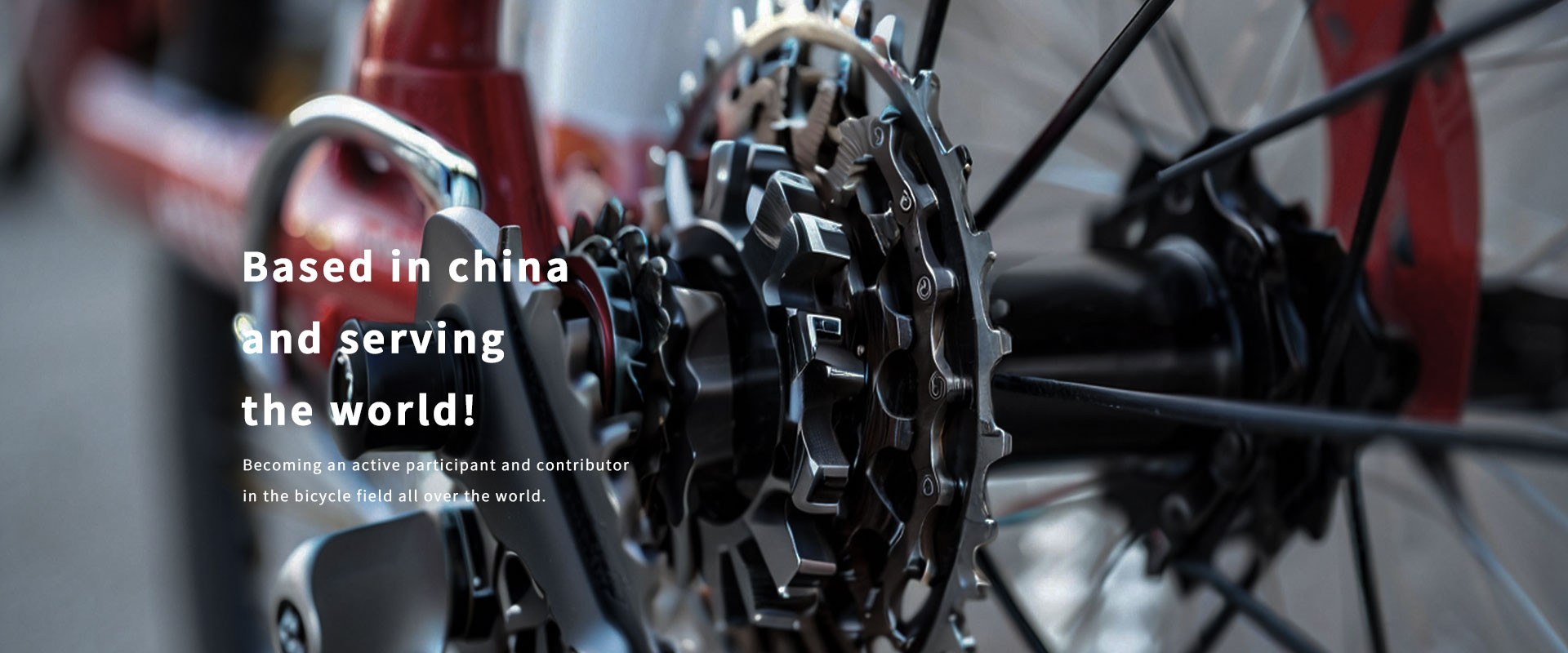
Differences in Design and Manufacturing Between Road Bike Hubs and Mountain Bike Hubs
The design differences between road bike hubs and mountain bike hubs essentially stem from the core usage scenarios of the two types of bicycles (road racing vs. complex mountain terrain). Ultimately, these differences are reflected in the trade-offs and optimizations across key dimensions such as weight, strength, smoothness, and functionality. Below is a detailed analysis of their core design objectives, key component differences, and performance priorities:
I. Core Design Objectives: Completely Different "Priority Rankings"
The design starting points of the two types of hubs are entirely distinct, which directly determines the selection and structural design of all subsequent components:
Type Core Objective Derived from Usage Requirements
Road Bike Hub Ultimate lightweight, low rolling resistance (high smoothness), and improved transmission efficiency Road surfaces are flat with no severe bumps or impacts. The core requirement is "speed" — reducing resistance and weight to help riders save energy and increase speed.
Mountain Bike Hub High strength, durability, impact resistance, and functional adaptability (e.g., shifting, braking) Mountain terrain is complex (gravel, steep slopes, jumps). Hubs must withstand frequent vertical impacts, lateral torsion (cornering, climbing), and be compatible with wide tires, disc brakes, and multi-speed shifting systems. "Robustness and durability" are the top priorities.
II. Specific Design Differences in Key Components
1. Hub Shell: A Trade-off Between Weight and Strength
Road Bike Hub:
Material: Primarily uses high-strength aluminum alloy (e.g., 7075 aluminum alloy); some high-end models adopt carbon fiber (for further weight reduction).
Structure: The shell wall is extremely thin (1-2mm in some cases), with a compact shape and large openings (to reduce material usage). To fit narrow road tires, the flange spacing is small (typically 40-50mm), and the axle diameter is relatively thin (commonly 10mm or 12mm).
Core Logic: Under the premise of "meeting the light load requirements of road riding," reduce weight as much as possible.
Mountain Bike Hub:
Material: Mainly uses high-toughness aluminum alloy (e.g., 6061, 7075); carbon fiber is rarely used (due to insufficient strength). Hubs for downhill/heavy-duty mountain bikes may include steel reinforcement parts.
Structure: The shell wall is thicker (2-4mm), with a sturdy shape and small openings (to ensure structural strength). To fit wide mountain tires and provide stable support, the flange spacing is large (typically 50-65mm, or even wider for Boost standards), and the axle diameter is thick (commonly 12mm, 15mm, or 20mm — increasing axle diameter enhances torsion and impact resistance).
Core Logic: Must withstand high-frequency impacts and torsion during mountain riding; structural strength takes precedence over weight.
2. Freehub Body: Adapting to Shifting and Transmission Efficiency
The freehub body is the core component for mounting the cassette and enabling "driving during riding" and "coasting in idle." Differences lie in the compatibility with cassette specifications and structural strength:
Road Bike Hub:
Compatible Cassettes: Previously, most used cassette-type freewheels (Shimano HG, Campagnolo standards); modern high-end road bikes (especially those with electronic shifting systems) generally adopt 11-speed, 12-speed, or even 13-speed cassettes. The freehub body has fewer teeth (e.g., Shimano road freehub bodies have 11 teeth), and the tooth profile design prioritizes "fast engagement" (to improve shifting response speed).
Structure: The freehub body is short (since road cassette cogs are thin and, despite the large number of cogs, the total width is small). The internal pawl/spring structure is compact, with materials primarily being lightweight aluminum alloy. Some high-end models use titanium alloy pawls (to reduce wear).
Core Logic: Adapt to the dense gear ratios of road shifting, pursuing shifting efficiency and lightweight.
Mountain Bike Hub:
Compatible Cassettes: Previously, there were thread-on freewheels (gradually phased out); now, all use cassette-type freewheels, with common configurations of 10-speed, 11-speed, or 12-speed (with a large gear ratio range to adapt to climbing and descending). The freehub body has more teeth (e.g., Shimano mountain freehub bodies have 13 teeth, and some brands have 16 teeth), and the tooth profile is sturdier (to withstand greater driving force and impact).
Structure: The freehub body is long (since mountain cassette cogs are thick and the large gear ratio range results in a wide total width). It has more internal pawls (e.g., 4 or 6 pawls, to improve engagement stability), stronger springs, and a thicker freehub body shell (to prevent deformation). Freehub bodies for some heavy-duty mountain bikes have a steel coating (to enhance wear resistance).
Core Logic: Adapt to the wide-range shifting gear ratios, withstand high torque during mountain riding (e.g., climbing, forceful acceleration), and emphasize structural durability.
3. Bearings/Axle Cups: Balancing Smoothness and Strength
The "smoothness" (rolling resistance) and "stability" of a hub are mainly determined by its bearings or axle cups. The two types of bicycles show significant differences in selection:
Road Bike Hub:
Type: Universally uses cartridge bearings, especially ceramic bearings (in high-end models). Cartridge bearings have lower rolling resistance, and ceramic materials (silicon nitride) are lighter and smoother than steel, further reducing riding resistance.
Structure: Bearings are small in size (due to the thin axle and light load). The sealing design is relatively simple (road environments are clean, so no excessive dust or water protection is needed). Some models even use "open bearings" (relying only on rubber seals for dust protection).
Core Logic: Pursue ultimate "smoothness" to reduce power loss, with low requirements for sealing.
Mountain Bike Hub:
Type: Previously, most used cup-and-cone bearings (simple structure, low maintenance cost, and adjustable axle cup clearance to compensate for wear). Modern mid-to-high-end mountain bike hubs also use cartridge bearings, but mainly steel bearings (ceramic bearings, though smooth, have slightly weaker impact resistance and high cost).
Structure: Bearings are large in size (due to the thick axle and heavy load). The sealing design is extremely strict — adopting combinations such as multi-lip seals, dust covers + waterproof rubber rings (to handle sand, rain, and mud in mountainous areas, preventing impurities from entering the bearings and causing jamming or wear).
Core Logic: Prioritize "sealing performance" and "impact resistance" over smoothness, while also considering maintenance convenience (an advantage of cup-and-cone bearings).
4. Brake Compatibility: From "Lightweight" to "Powerful Braking"
Differences in braking systems directly affect hub structural design, especially after the popularization of disc brakes, making the distinction between the two types of hubs more obvious:
Road Bike Hub:
Traditional Road Bikes (Rim Brakes): Hubs only need to be designed with spoke holes, no additional adaptation to braking components is required. The shell is more compact and lightweight.
Modern Road Bikes (Disc Brakes): Although they need to be compatible with disc brake rotors (adding brake mounts), the brake mount design is compact (since road disc brakes have lower braking force requirements than mountain bike disc brakes). The overall design still prioritizes "weight reduction" (e.g., using hollowed-out brake mounts).
Core Logic: Brake adaptation does not sacrifice lightweight, with moderate braking force requirements.
Mountain Bike Hub:
Early Mountain Bikes (V-Brakes): Hubs needed to be designed with brake tracks (steel or aluminum alloy, to withstand brake friction), but these have now been largely replaced by disc brakes.
Modern Mountain Bikes (Disc Brakes): Hubs must integrate disc brake mounts (common international standards: IS, Post Mount). The brake mounts are thick and high-strength (since mountain bike disc brakes have extremely strong braking force, especially during frequent braking downhill, which needs to withstand huge radial force and temperature impact). Brake mounts on some heavy-duty mountain bike hubs are designed with reinforcing ribs.
Core Logic: Brake adaptation focuses on "withstanding powerful braking," with structural strength as the priority.
III. Performance Priority Comparison: Understand Core Differences at a Glance
Comparison Dimension Road Bike Hub Mountain Bike Hub
Weight Ultra-lightweight (front hub: ≈80-150g; rear hub: ≈150-250g) Relatively heavy (front hub: ≈120-200g; rear hub: ≈200-350g), with strength as the priority
Strength/Impact Resistance Only meets light load requirements (flat roads, no severe impacts) High strength, high torsion resistance, and impact resistance (to handle bumps, jumps, and steep slopes)
Smoothness (Rolling Resistance) Extremely high (ceramic bearings + low sealing resistance, reducing power loss) Moderate (steel bearings + strong sealing, prioritizing dust and water protection)
Sealing Performance Weak (clean road environment, simple dust protection suffices) Extremely strong (multi-layer sealing, protecting against sand, rain, and mud)
Compatible Specifications Narrow tires (23-28mm), multi-speed cassettes with dense gears (11-13 speeds), rim brakes/lightweight disc brakes Wide tires (2.0-2.8 inches, or even wider), wide-range cassettes (10-12 speeds), powerful disc brakes
Maintenance Convenience Low (most bearings are integrally sealed and need to be replaced entirely when damaged) High (some use cup-and-cone bearings, allowing individual adjustment or replacement of components)
IV. Extension: Can They Be Interchanged? — Absolutely Not Recommended
From the perspective of design logic and specification compatibility, the two types of hubs are completely incompatible. Forced interchange will lead to serious problems:
Specification Incompatibility: Road bike hubs have small flange spacing and cannot fit wide mountain tires (which will cause wheel wobble and uneven spoke tension). Mountain bike hubs have thick axles and cannot be installed into the axle holes of road bike frames (road bike frame axle holes are mostly quick-release or 12mm thru-axle, while mountain bikes commonly use 15mm/20mm thru-axle).
Performance Mismatch: Using road bike hubs on mountain bikes will result in hub deformation and bearing damage due to insufficient strength (unable to withstand mountain impacts). Using mountain bike hubs on road bikes will significantly reduce riding speed and efficiency due to excessive weight and insufficient smoothness.
Component Incompatibility: Road freehub bodies cannot mount mountain cassettes (different tooth pitch and width). The brake mount specifications of mountain bike disc brake hubs are also incompatible with road disc brakes (different mounting hole positions and spacing).
Conclusion
Road bike hubs are products optimized for "speed," with all designs centered around "weight reduction and resistance reduction." Mountain bike hubs are practical products built for "durability," with the core goal of "being rugged and stable." The differences between them are a typical reflection of "scenarios determining performance" in bicycle design — there is no absolute "good or bad," only "whether they meet the needs."