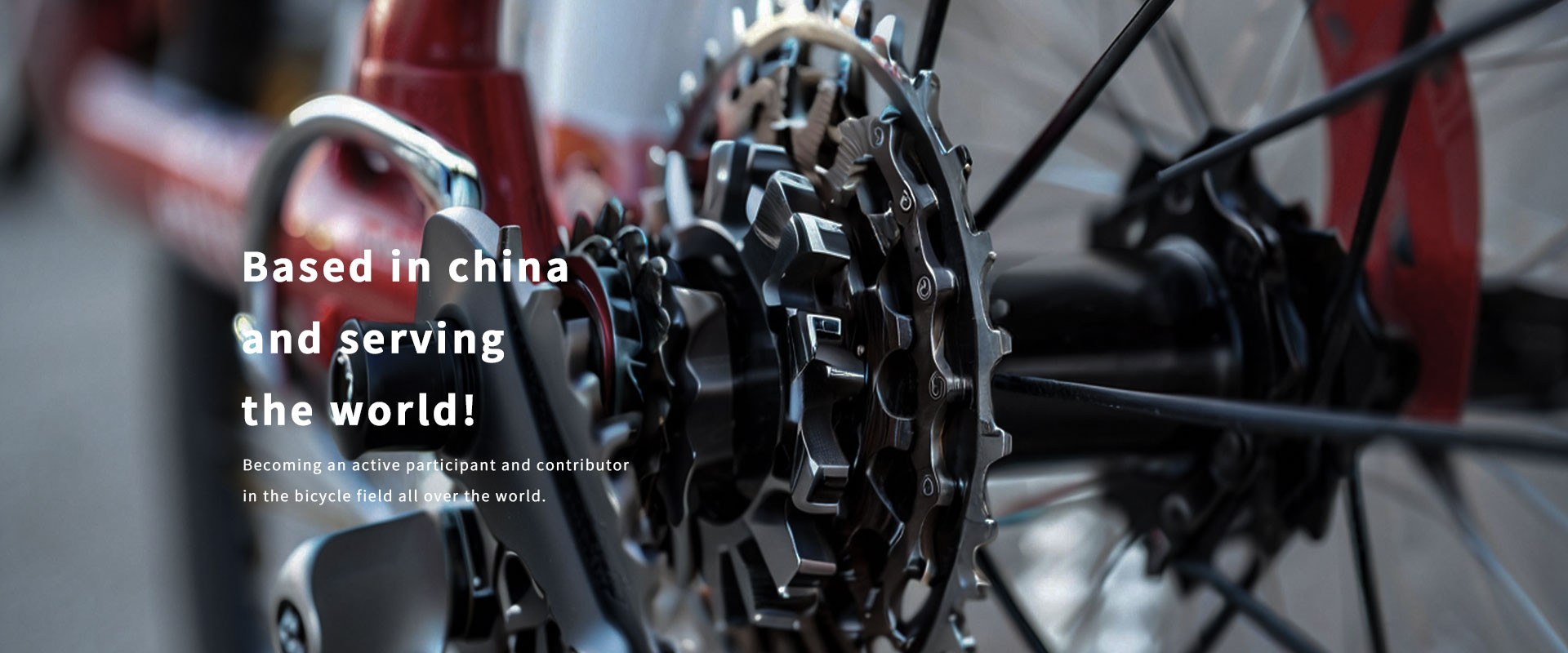
A brief introduction to the production and processing technology of bicycle hubs.
The production and processing technology of bicycle flower drum generally includes the following main steps:
Design and mold manufacturing
Product design: according to the use requirements and performance characteristics of different types of bicycles, design the structure, size and appearance of the flower drum. The key parameters such as the material, bearing type and installation mode of the flower drum are determined, and the mechanical analysis of strength and stiffness is carried out to ensure that the flower drum can meet all kinds of stress requirements during riding.
Mold manufacturing: according to the design drawings, the mold for producing flower drums is manufactured. The precision and quality of the mold directly affect the forming quality and production efficiency of the flower drum. Usually, CNC machining center and other equipment are used to process the mold to ensure the dimensional accuracy and surface quality of the mold.
Raw material preparation
Material selection: according to the performance requirements and cost considerations of the flower drum, choose the appropriate raw materials. Common flower drum materials are aluminum alloy, steel and carbon fiber. Aluminum alloy has the advantages of light weight and good corrosion resistance, and is the most widely used flower drum material at present. Steel has high strength, but heavy weight; Carbon fiber has a very high strength-to-weight ratio, but the cost is high, and it is generally used in high-end flower drums.
Inspection: After purchasing raw materials, strict inspection is required. Check whether the chemical composition and mechanical properties of the material meet the requirements, and detect the surface quality of the material, such as cracks, sand holes and other defects. Unqualified raw materials should be returned in time to avoid affecting product quality.
Blanking: according to the size and specifications of the flower drum, cut the raw materials into suitable blanks. Attention should be paid to controlling the dimensional accuracy in the blanking process to reduce the waste of materials. For metal materials such as aluminum alloy, the common cutting methods are sawing and shearing. For carbon fiber materials, special cutting equipment is needed to ensure the quality of the cutting surface.
contour machining
Forging (optional): For some flower drums that require high strength, especially aluminum alloy flower drums, forging technology is often used. After the blank is heated to a certain temperature, it is put into a mold, and pressure is applied by forging equipment to make the metal material flow in the mold. Forging can improve the internal structure of metal, improve the strength and toughness of materials, and make the shape of flower drum more compact and the surface quality better.
Casting (optional): Casting is also a common flower drum forming method, especially for some flower drums with complex structures. The molten metal is poured into a pre-made mold, and the blank of the flower drum can be obtained after the molten metal is cooled and solidified. Various flower drums with complex shapes can be manufactured by casting process, but the internal structure of the castings is relatively loose, and its performance needs to be improved by subsequent processing and treatment.
Machining: Both forged and cast flower drum blanks need to be machined to meet the design requirements of dimensional accuracy and surface quality. The machining process includes turning, milling, drilling and tapping. Using CNC lathe, milling machine and other equipment, the outer circle, inner hole, end face, spoke hole and other parts of the flower drum are accurately machined to ensure the dimensional accuracy and shape and position tolerance of each part. At the same time, various patterns and logos are processed on the surface of the flower drum to meet the requirements of design.
Heat treatment (for metal flower drum)
Objective: Heat treatment can improve the strength, hardness, toughness and other mechanical properties of metal flower drums, improve the internal structure of materials, eliminate the residual stress generated during processing, and improve the service life and reliability of flower drums.
Process: Common heat treatment processes include quenching, tempering and annealing. For aluminum alloy flower drums, the combination of solution treatment and aging treatment is usually adopted to improve the strength and hardness of aluminum alloy. For steel flower drums, quenching and tempering may be used to obtain good comprehensive mechanical properties of steel. During heat treatment, parameters such as heating temperature, holding time and cooling rate should be strictly controlled to ensure the consistency of heat treatment effect.
surface treatment
Objective: Surface treatment can improve the corrosion resistance, wear resistance and aesthetics of flower drum. At the same time, some surface treatment processes can also improve the adhesion between the flower drum and other parts, such as the adhesion of painting.
Process: Common surface treatment processes include anodizing, electroplating and painting. Anodizing is the most commonly used surface treatment method of aluminum alloy flower drum. Through electrolytic oxidation, a hard, wear-resistant and corrosion-resistant oxide film is formed on the surface of aluminum alloy. The color of oxide film can be adjusted by electrolytic coloring or dyeing to meet different appearance requirements. Electroplating is commonly used in steel flower drums, and a layer of metal, such as chromium and zinc, is plated on the surface of steel to improve the corrosion resistance and aesthetics of steel. Spray painting technology can provide various colors and appearance effects for flower drums, and at the same time, it can also play a certain protective role.
put together
Parts cleaning: clean all parts of the flower drum after processing and surface treatment to remove oil stains and impurities on the surface, so as to ensure the cleanliness of the parts surface. After cleaning, water can be removed by blow drying or drying to prevent parts from rusting.
Bearing installation: according to the design requirements of the flower drum, select the appropriate bearing and install it into the shell of the flower drum. The installation accuracy of the bearing is very important to the rotating performance of the hub, so it is necessary to use professional installation tools to ensure that the bearing is installed in place and maintain an appropriate preload. For some high-end flower drums, multiple bearings or special bearing configurations may be adopted to improve the bearing capacity and rotational smoothness of the flower drum.
Installation of other parts: install other parts of the flower drum, such as shaft stop, washer, nut, etc. In the installation process, pay attention to the installation sequence and position of each component to ensure firm installation. For the disc brake hub, it is also necessary to install the disc brake mounting seat and ensure its installation accuracy to ensure the normal operation of the disc brake system.
Finished product inspection: after the assembly is completed, conduct a comprehensive finished product inspection of the flower drum. Check the appearance of the flower drum for defects, such as surface scratches and bumps; Test the rotating performance of the flower drum, including smoothness, axial and radial clearance, etc. Check the tightness of the flower drum to ensure that the flower drum can effectively prevent dust and moisture from entering the interior. Unqualified products should be reworked or scrapped.
Packaging and warehousing
Packaging: The flower drum that has passed the inspection shall be packaged, usually with paper boxes, plastic bags and other packaging materials to protect the flower drum from being damaged during transportation and storage. The model, specification, production date and other information of the flower drum should be marked on the package for easy identification and management.
Warehousing: Store the packaged flower drums in the warehouse and store them according to different models and specifications. The warehouse should be kept dry and ventilated to prevent the flower drum from being affected by moisture and corrosion. At the same time, it is necessary to establish a perfect inventory management system to record and manage the storage of flower drums to ensure the traceability of products.