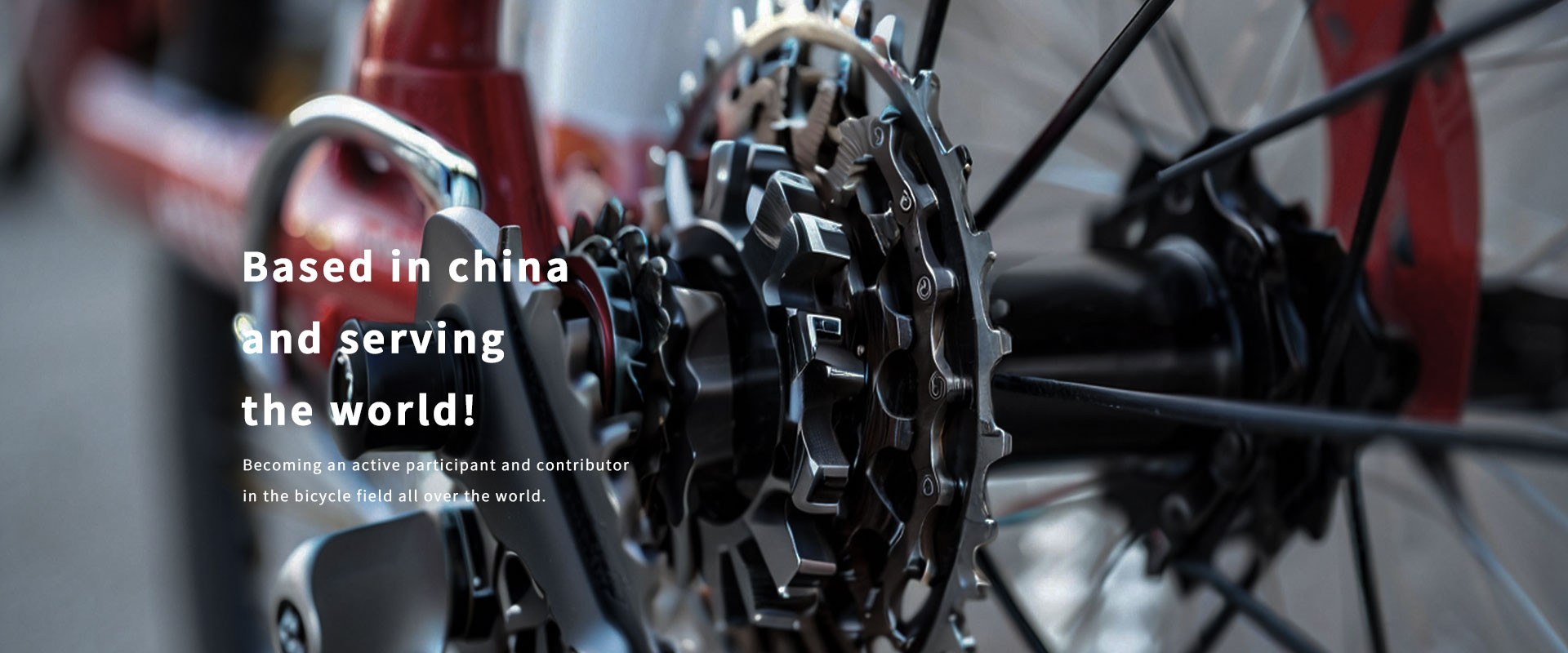
How to Judge the Quality of a Bicycle Hub?
To determine the quality of a bicycle hub, you can start from the following aspects:
Appearance Inspection
Surface Treatment: The surface treatment of a high-quality hub is meticulous. For hubs with an anodizing treatment, the color should be uniform, the gloss should be good, and there should be no obvious defects, bubbles, scratches, or uneven oxidation. In the case of a painting process, the paint surface should be flat and smooth, without issues such as paint runs or peeling.
Welding Quality: Observe the welded parts of the hub, such as the connection between the spoke holes and the hub body, and the welding area between the hub axle and the hub shell. The welding points should be even and full, without problems like false welding, missed welding, or residual welding slag. The welding strength should be high to ensure the structural stability of the hub.
Testing of Rotational Performance
Smoothness: Rotate the hub by hand. A high-quality hub should rotate very smoothly, without any sticking, jerking, or obvious resistance. It can keep rotating for a relatively long time and won't stop quickly. For cartridge-bearing hubs, you can fix the hub axle and gently rotate the hub shell by hand to feel the smoothness of the internal bearings.
Axial and Radial Clearance: Hold the hub axle and shake the hub shell left and right and up and down to check if there is obvious axial or radial clearance. The clearance of a high-quality hub is very small, and it is almost impossible to feel any shaking. If the clearance is large, it will affect the stability of the wheel set and the safety of riding, and it may also cause damage to the hub after long-term use.
Seal Inspection
Waterproof and Dustproof Performance: The sealing of the hub is crucial for its service life. Check the sealing components of the hub, such as the seals at the ends of the axle and the rubber seals between the hub shell and the spoke holes. The sealing components of a high-quality hub are made of good materials and are installed tightly, which can effectively prevent rainwater, dust, soil, etc. from entering the inside of the hub, and avoid the wear and corrosion of the bearings and other components.
Judgment of Material and Craftsmanship
Material: Understand the material of the hub through observation and referring to product information. As mentioned before, the aluminum alloy material should have a certain degree of hardness and strength, and it is relatively light in weight; the steel material has high strength but is heavier; the carbon fiber material is light and has high strength, but it is expensive. You can use a magnet to preliminarily determine the material of the hub. Generally, aluminum alloy and carbon fiber hubs are not attracted by the magnet, while steel hubs will be attracted.
Machining Precision: Carefully observe each component of the hub. The inner wall of the hub shell should be smooth, without casting defects or machining marks; the positions of the spoke holes should be accurate, and the sizes should be consistent to ensure the uniformity of spoke installation and the strength of the wheel set. In addition, the surface of the hub axle should be smooth, with high precision, and it should fit tightly with the bearings without any looseness.
Reference of Brand and Reputation
Brand: Well-known brands usually have better guarantees in terms of quality control, production processes, and after-sales services. Brands like Shimano and SRAM, with years of market experience and technological accumulation, generally offer products with relatively reliable quality.
User Reviews: You can learn about the evaluations and usage experiences of other users regarding different hub brands and models through channels such as online forums, social media groups, or cycling communities. If a certain hub has a good reputation among users and there are few feedbacks about quality issues, then its quality is relatively more guaranteed.